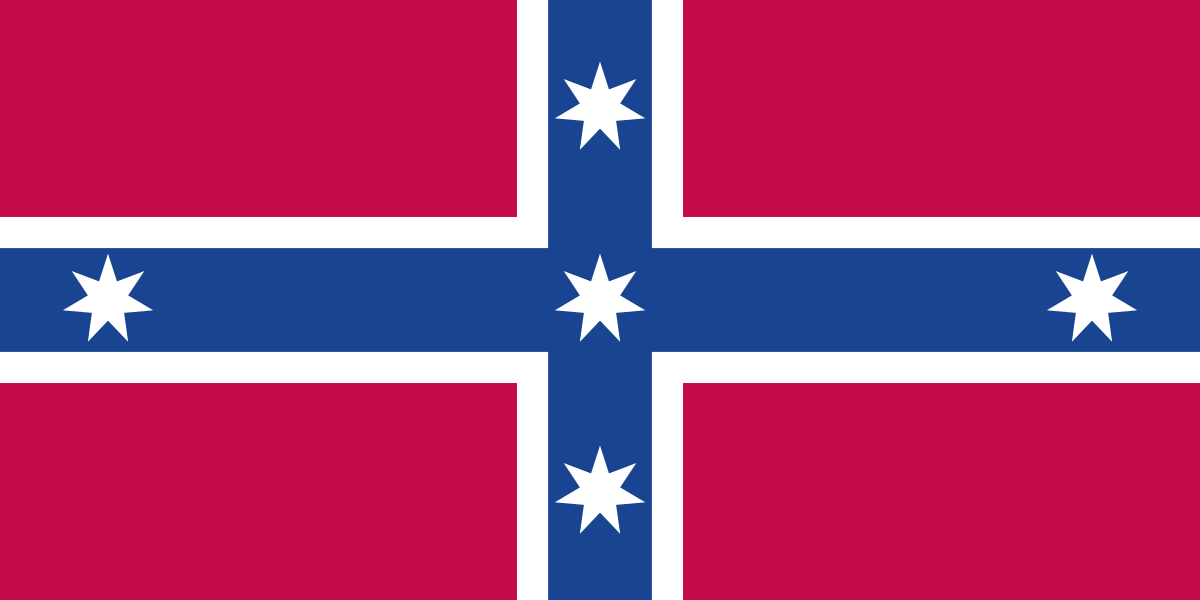
| Name | The Cross of Victoria |
|---|---|
| Use | State flag |
| Proportion | 1:2 |
| Status | Proposal, 2026 |
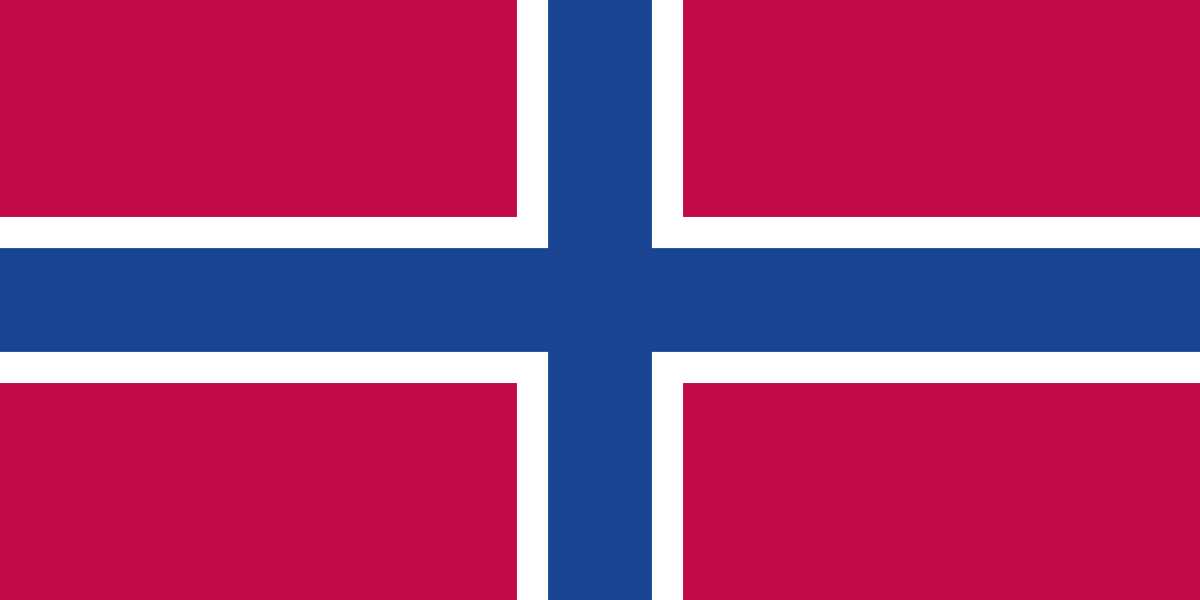
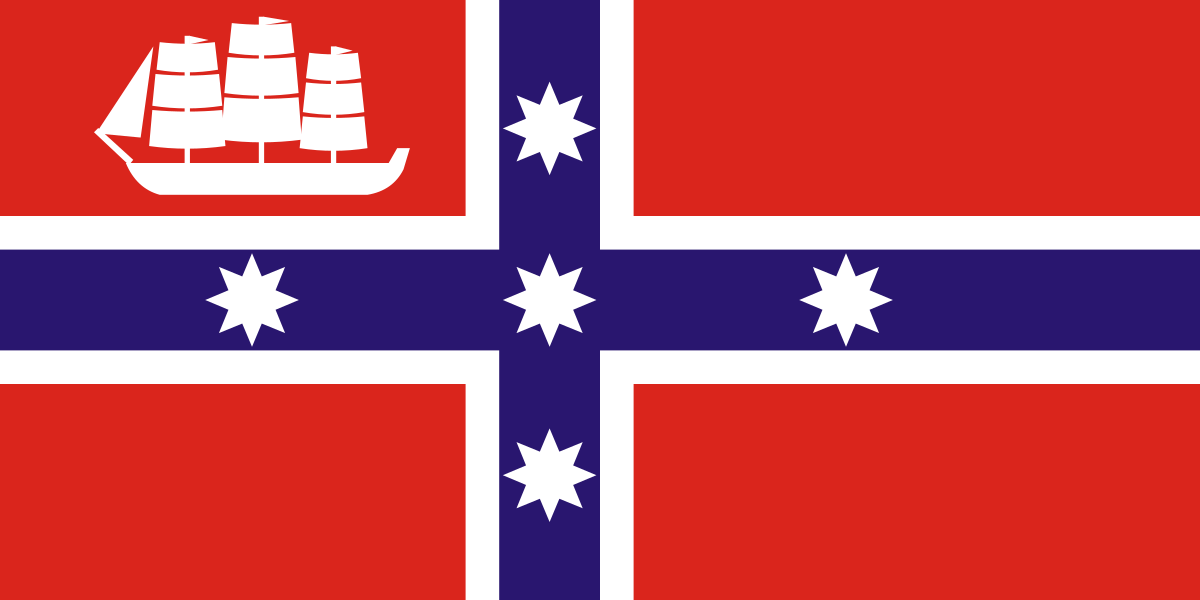
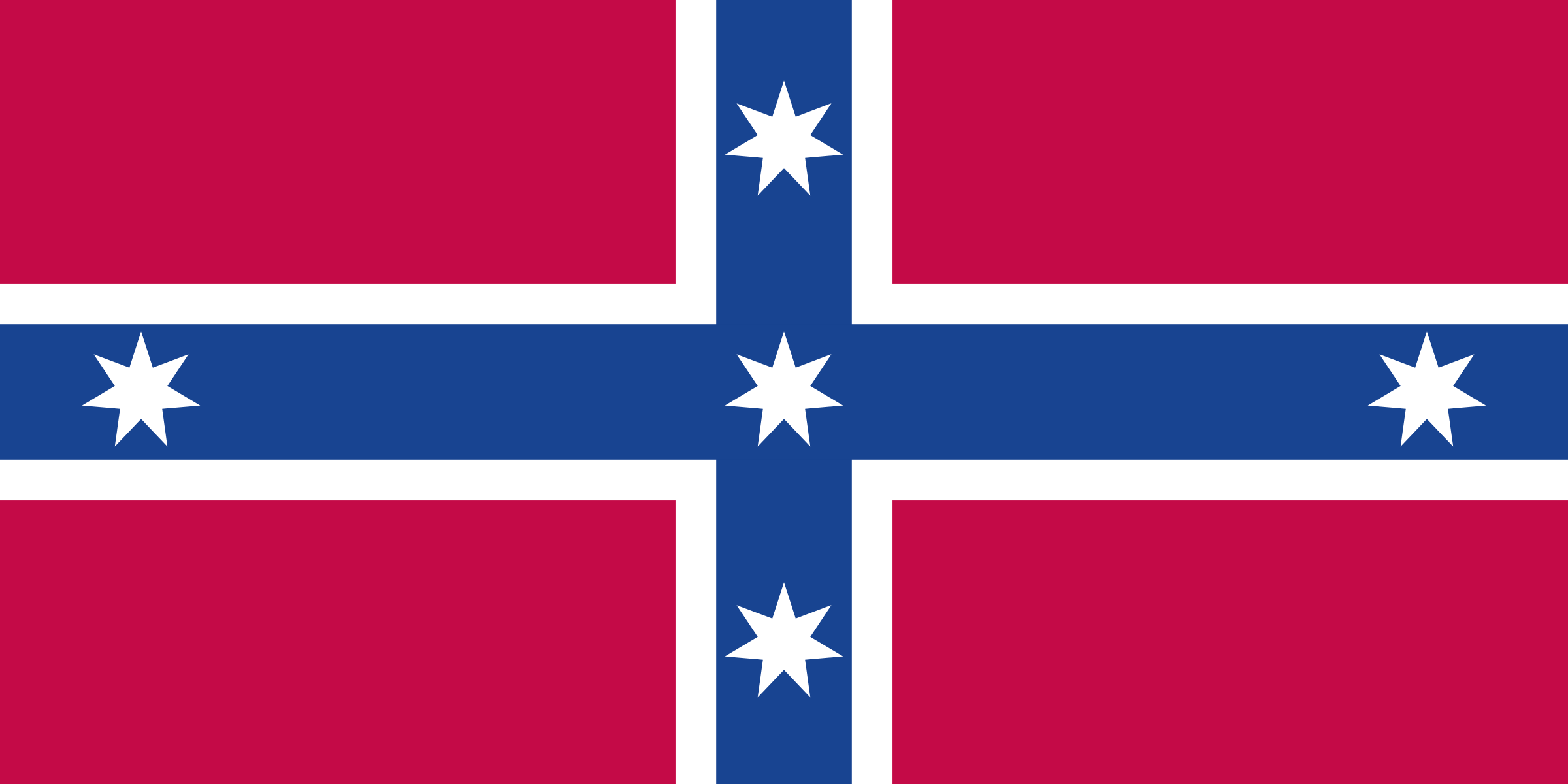
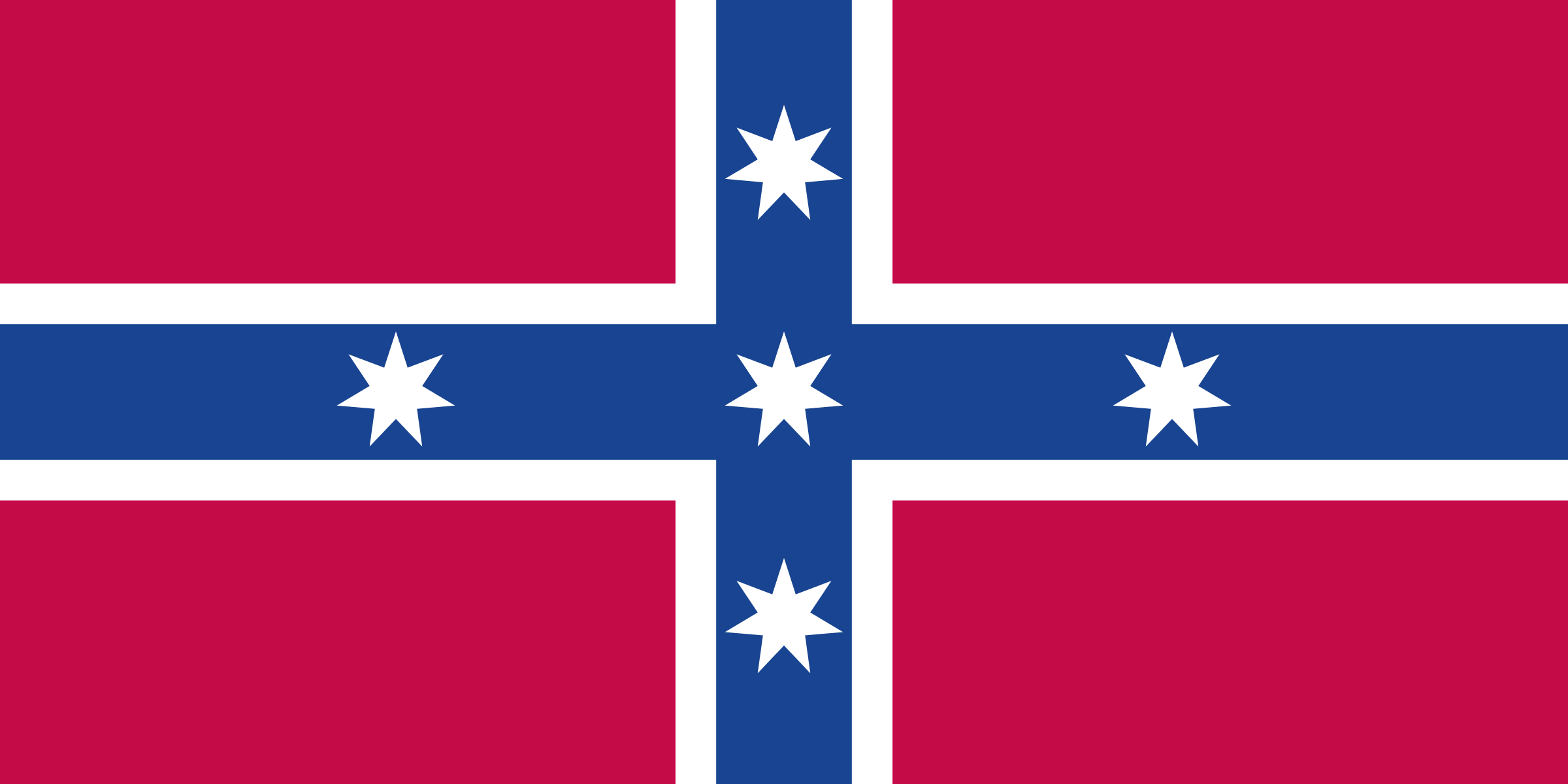
| Design | A red field with a blue cross fimbriated white, charged with five white five-pointed stars: one at the crossing and one on each arm. |
| Designed by | Brodie Geoffrey Dunn |
| Variant | |
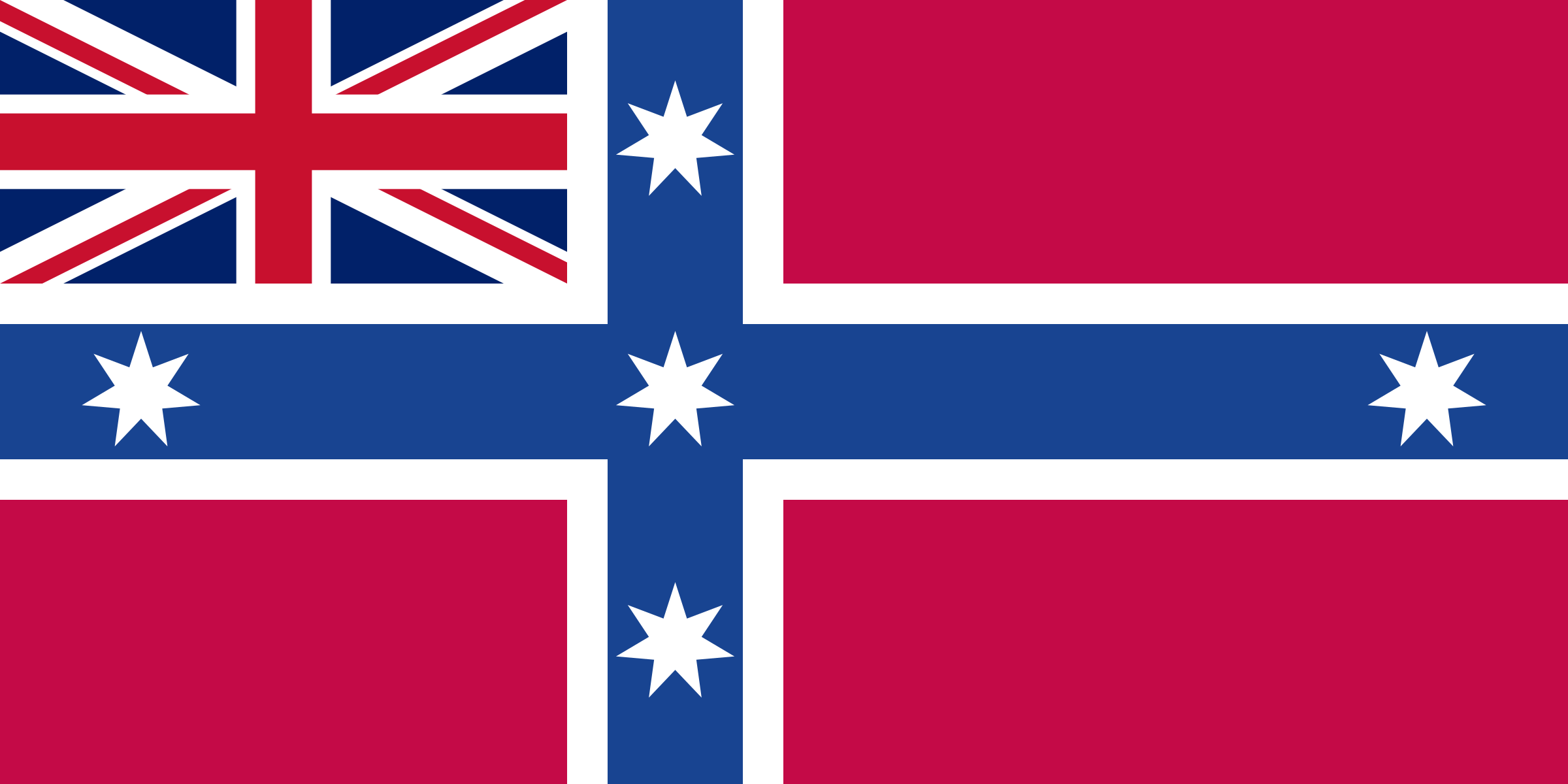 | |
| Design | The Union Jack in the canton, with the cross set toward the hoist to make room. |
The Cross of Victoria is a proposed state flag for Victoria, Australia: a red field with a blue cross fimbriated white, charged with five white five-pointed stars. It would replace the British Blue Ensign defaced by the state badge, flown since 1870.[1] A variant keeps the Union Jack in the canton. The flag was put forward by its designer, Brodie Geoffrey Dunn, in 2026.
Justification
Union Jack
“The state flag of Victoria is a British Blue Ensign defaced by the state badge of Victoria in the fly.”[1] By tradition “the Union Jack occupies the upper quarter next the staff”.[1]
Blue Ensign
“The flags of the Australian states all bear the Union Jack on a dark blue background and each is distinguished by a state badge.”[2] Flags based on the Blue Ensign include those of Australia, all six states, Fiji, New Zealand, the Cook Islands and Tuvalu.[3] The form began at sea. W. G. Perrin, 1922: “By the Colonial Naval Defence Act of 1865 it became lawful for any colony, subject to certain conditions, to provide and maintain its own vessels of war, and these were authorised to wear the blue ensign with the seal or badge of the colony in the fly and a blue pendant.”[4]
Legislation
“Unlike the national flag, the flag of Victoria is not defined by legislation (either state or federal). As a result, there are no official legal requirements for the construction of the flag of Victoria.”[1] The Flags Act 1953 covers the Australian National Flag and the Australian Red Ensign, not the state flags.[5] New South Wales, Queensland and Western Australia legislated for their flags between 2004 and 2006;[6] Victoria, South Australia and Tasmania have not.
Badge
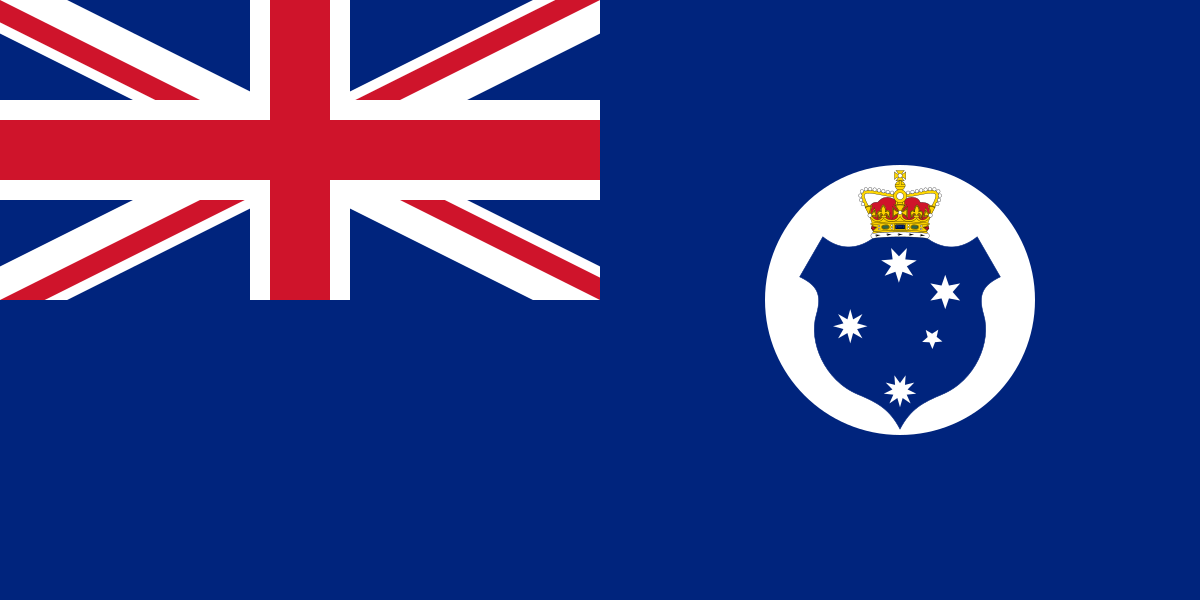
“The first flag of Victoria was adopted in 1870 and was first flown from HMVS Nelson on 9 February 1870. It too was a defaced British Blue Ensign with the Southern Cross located in the fly.”[1] Gazetted 4 February 1870.[7] In March 1877 the stars went onto a blue shield under an Imperial Crown, on a white disc;[8] in November the disc and shield were dropped and the crown kept.[9] “Victoria then adopted the current flag in 1877 with the stars of the southern cross from then on having 5, 6, 7, 7 and 8 points. In 1901, the lieutenant-governor advised the secretary of state that henceforth a St Edward’s Crown would be used on the now state flag.”[1]
Which crown is disputed. The Department of the Prime Minister and Cabinet: “In 1901, with the accession of Edward VII, this Crown was replaced with the Crown of St Edward and the flag has not changed since.”[10] The Victorian Government also gives St Edward’s Crown.[11] Provenance, the journal of Public Record Office Victoria, gives the Tudor Crown in 1901 and St Edward’s Crown from 1953.[12] Britannica dates the new crown to 19 September 1901, in use from 6 January 1904.[13]
Stars
The national flag’s stars were made uniform in 1903. “The design of the Southern Cross was simplified when the blue and red ensigns were gazetted in February 1903. The four main stars, which originally had different number of points to reflect their varying brilliance, all became seven-pointed stars.”[14] Victoria’s were not: “The white stars on the Victorian flag have differing sizes and numbers of points (from 5 to 8), to signify the brilliance of each star in the constellation of the Southern Cross and their varying brightness.”[10]
Proposal
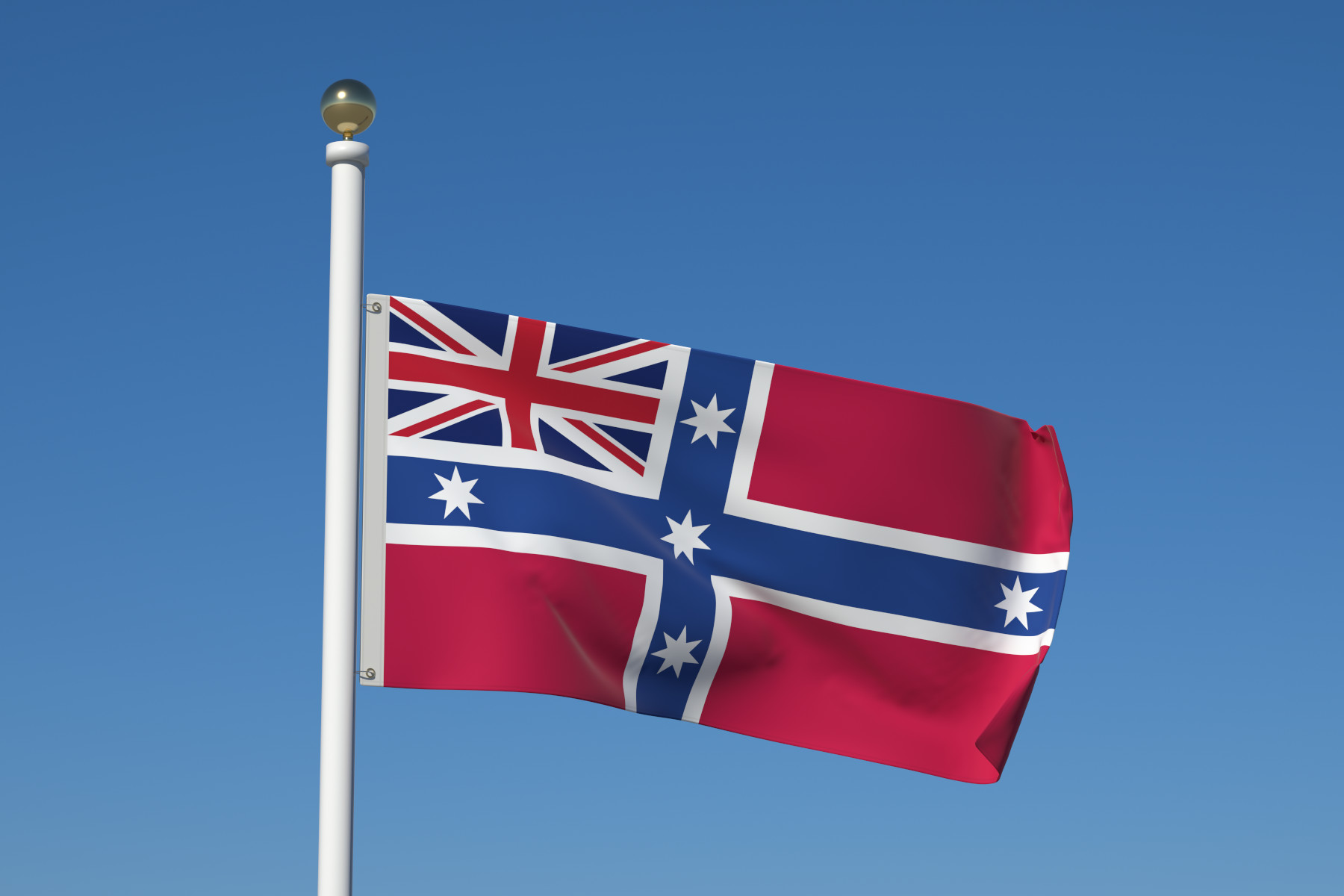
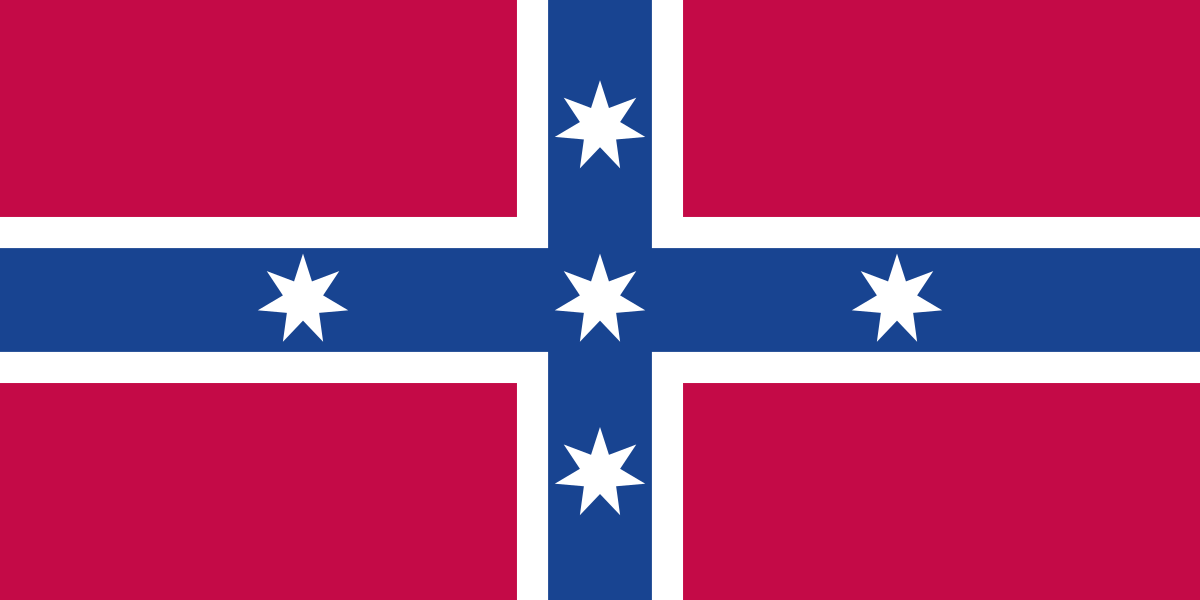
Colours
The designer describes it as a cultural flag, about family: mothers and fathers, their children, and the directions people take.
Red
Red signifies family. The four quarters stand for mother, father, son and daughter.
The flag of 1844 was “of a deep crimson ground”.[17] Fox-Davies, 1909: “every quartering exhibited means the representation in blood of some particular person.”[18]
White
White signifies peace and unity, the ties that hold a family together.
Thomas Francis Meagher, on the Irish tricolour in 1848: “The white in the centre signifies a lasting truce between the ‘Orange’ and the ‘Green’”.[19]
Blue
Blue signifies the world the generations share: sky, sea and land. The arms of the cross denote the directions people take.
The Department of the Prime Minister and Cabinet lists “Blue: PANTONE® 541” and “Silver: PANTONE® 877”: “These are also the state colours.”[10] The Southern Cross has been on blue since the first flag of 1870, “a defaced British Blue Ensign with the Southern Cross located in the fly”.[1] The flag’s blue is lighter and more vivid than Pantone 541, so it holds as blue beside the red at a distance, where a navy reads as black.
Stars
The five stars denote the ages of a life: infant, youth, adult and elder, and the ancestor the other four inherit from.
Censorinus, AD 238: Varro quinque gradus aetatis aequabiliter putat esse divisos, unumquemque scilicet praeter extremum in annos XV, “Varro holds that the stages of life are five, divided equally: each, that is, except the last, of fifteen years.”[20] Varro’s five are boys, youths, young men, elders and the old. The count is his; the stages are the designer’s.
A star at the crossing and one on each arm is older than the colony. Of the 1831 flag: “Like the Colonial Flag, the Federation Flag features a combination of the Union Flag and the Southern Cross, but the cross is blue, not red, and there are five stars, not four.”[21] The same arrangement is on the Eureka Flag of 1854[22] and the Victoria Police badge.[23]
Construction
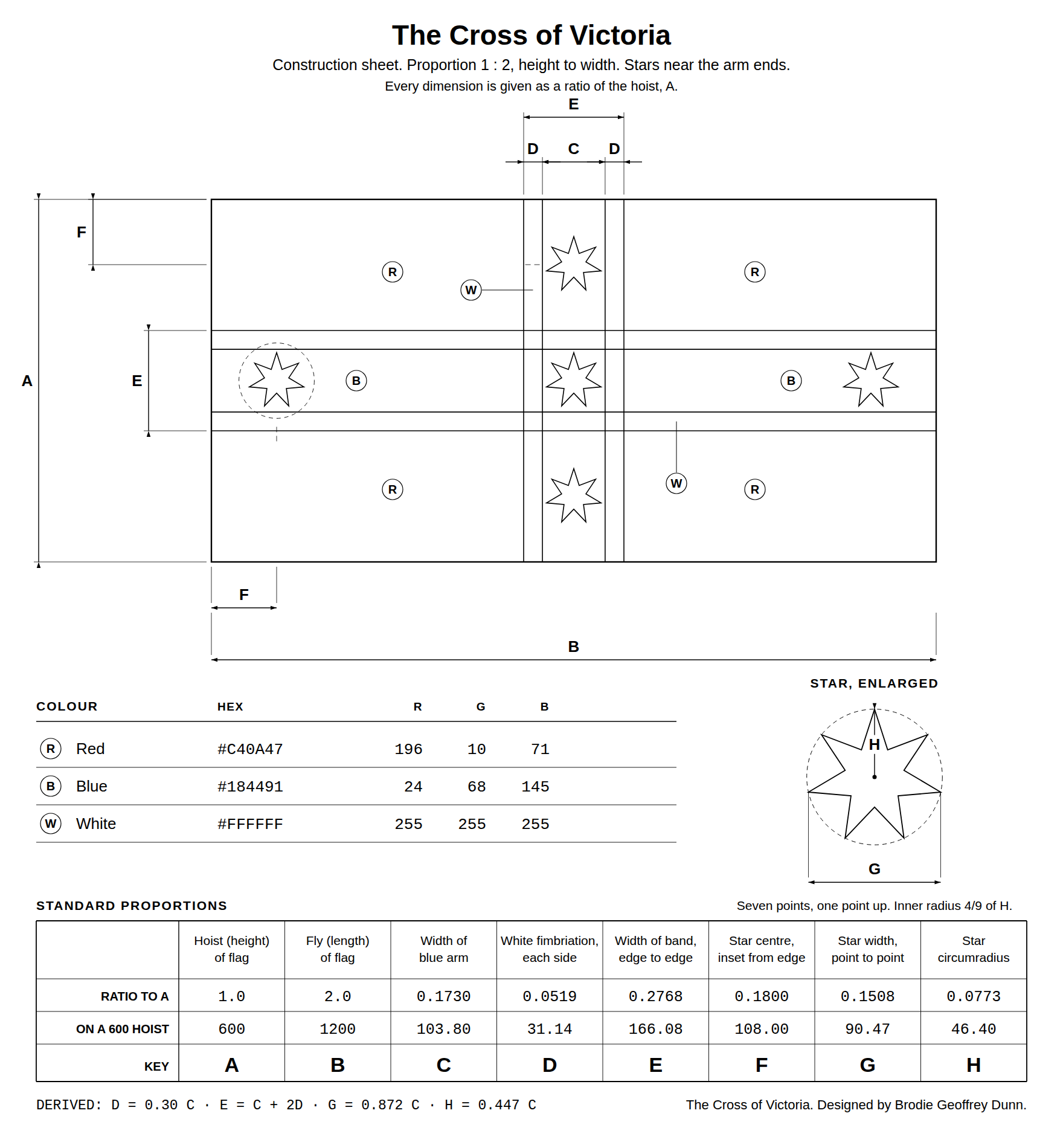
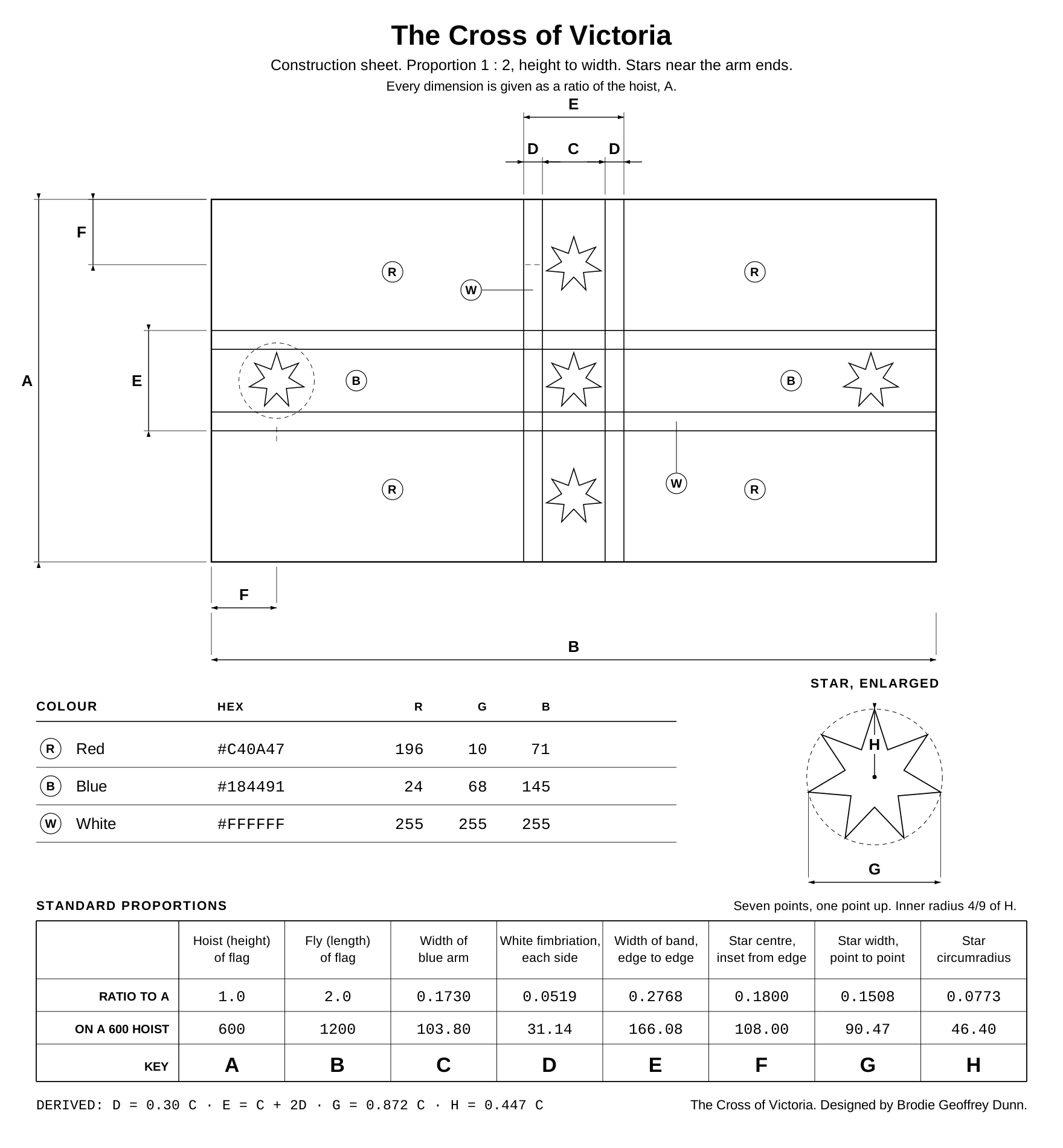
| Proportion | 1:2, height to length |
|---|---|
| Field | Red |
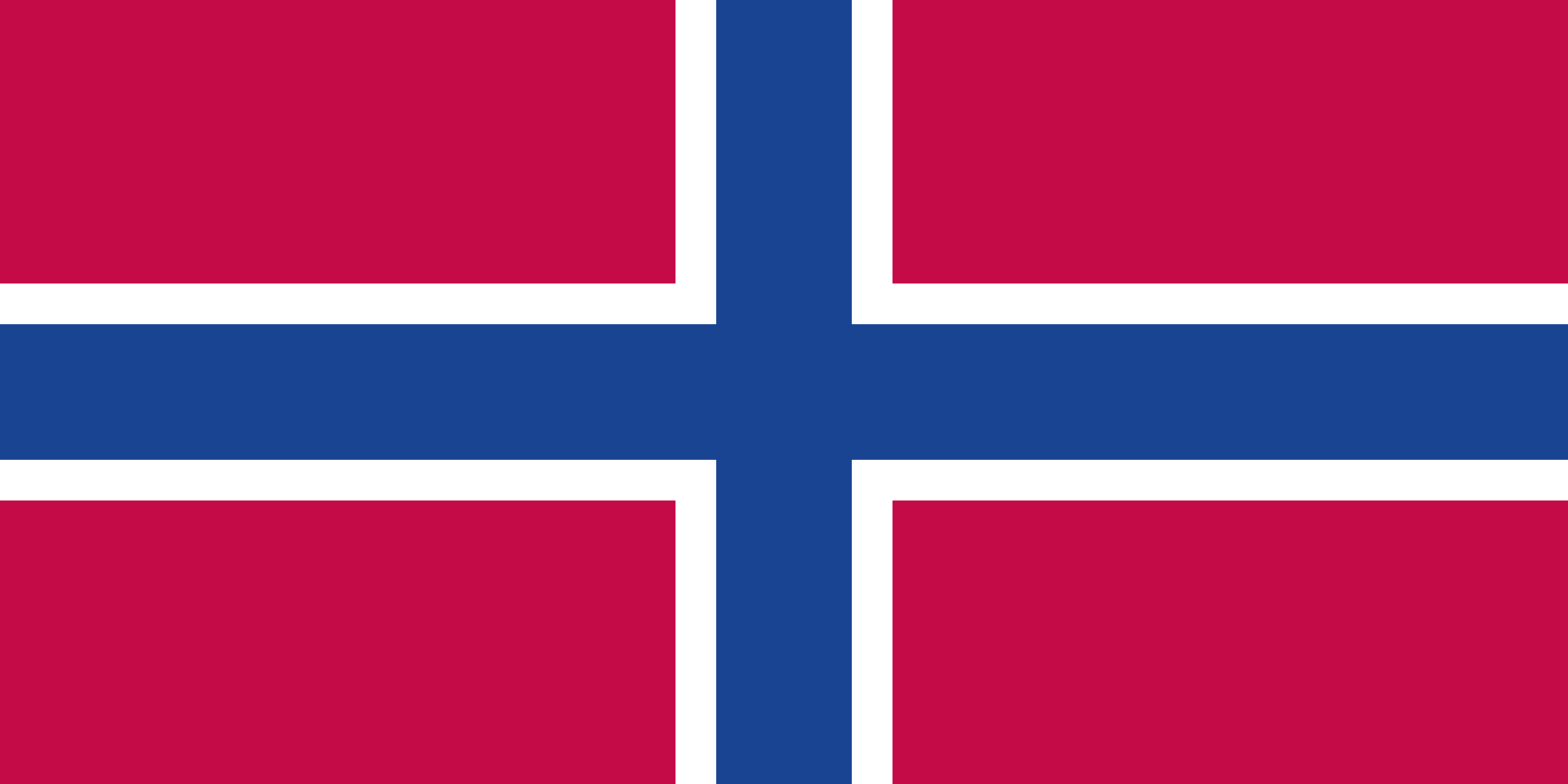
| Cross | Blue, fimbriated white, centred, reaching all four edges |
| Blue arm | 17.3% of the height |
| Fimbriation | 30% of the arm width, each side |
| Cross with fimbriation | 27.7% of the height |
| Stars | Five, white, five-pointed, one point up: one at the crossing, one on each arm |
| Star size | 85% of the arm width point to point (14.7% of the height); circumradius 0.447 of the arm width |
| Outer stars, proposals 3 and 4 | Centred 18% of the height in from each edge; the hoist star 9% of the length from the hoist |
| Hoist clearance, proposals 3 and 4 | Nearest point of the hoist star 5.3% of the length from the hoist edge: clears a heading of up to 5% of the length by about 6 mm on a flag 1800 mm long |
| Upper and lower stars, proposal 2 | 28.9% of the height above and below the crossing; 21.1% of the height in from the top and bottom edges |
| Hoist and fly stars, proposal 2 | 49.5% of the height either side of the crossing; 50.5% of the height in from the hoist and the fly |
| Canton, proposal 4 | The Union Jack at 1:2, filling the upper hoist quarter to the white edging: 36.2% of the length and 36.2% of the height |
| Cross, proposal 4 | Vertical arm centred 43.1% of the length from the hoist, so that the canton is 1:2; horizontal arm centred |
| Red | #C40A47, RGB 196 10 71 |
| Blue | #184491, RGB 24 68 145 |
| White | #FFFFFF, RGB 255 255 255 |
| Union Jack, proposal 4 | #012169 and #C8102E, its own blue and red |
| Reverse | Mirror image of the obverse |
| Heading | 3 to 5% of the length |
Edging
“According to the rule of tincture, one of the fundamental rules of heraldic design, colour may not be placed on colour nor metal on metal.”[24] Red and blue are both colours, so the cross is edged white. Red against this blue measures 1.53:1 in contrast, under the 3:1 the web accessibility guidelines ask of an edge in a graphic;[25] white measures 9.23:1 against the blue and 6.03:1 against the red.
Reference
Current
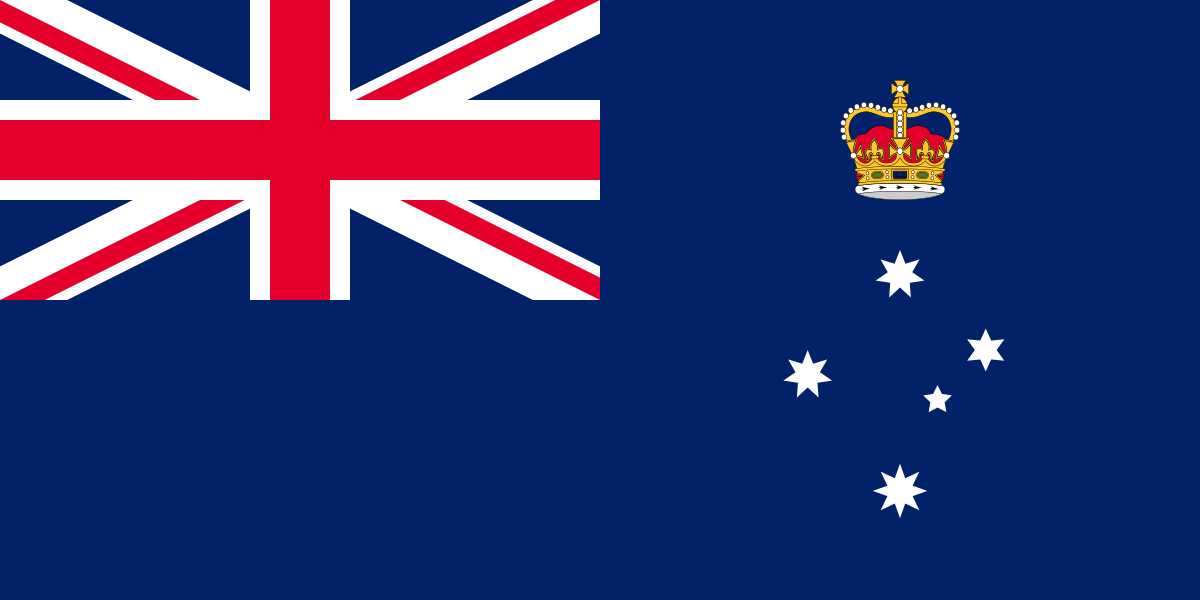
Flag of Victoria (1877)
The flag this proposal would replace. “It is the only Australian state flag not to feature the state badge on a round disc.”[1]
Image, public domain
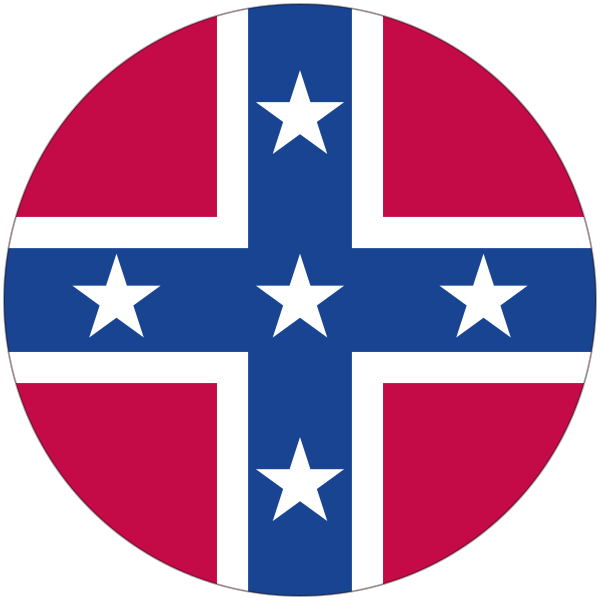
Victoria Police (current)
Closest precedent.
Flag: “based on the [British] blue ensign with the Victoria police badge in the fly”. Badge centre: “a disc with a blue cross on red fimbriated white containing 5 white 5-pointed stars”.[23]
Diagram of the badge centre, drawn from that description. Not authorised by, endorsed by or connected with Victoria Police.
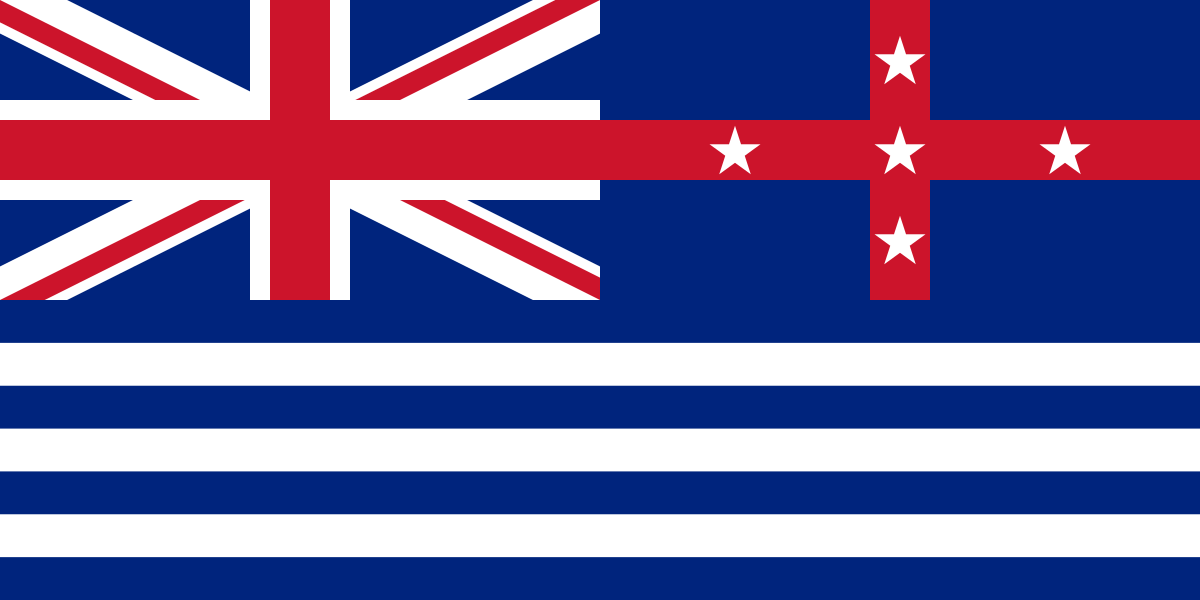
Murray River flag (1853)
1853: “a red cross with four horizontal bars of blue, the cross being charged with five stars as emblems of the different Australian colonies.” Still flown at Echuca and Mildura.[26]
Image, public domain
Historic
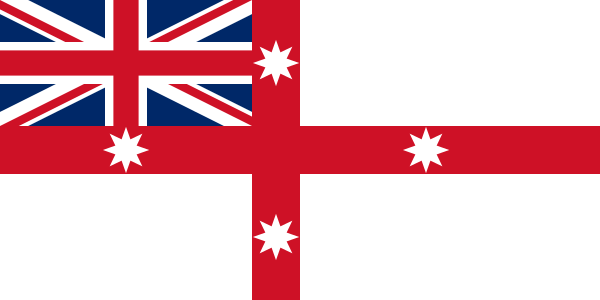
National Colonial Flag (1823)
Reference and inspiration.
John Bingle: “the British National St George’s Ensign adding Four (4) Stars placed in the four quarters of the Cross … as the emblem of our Hemisphere THE GREAT SOUTHERN CROSS.”[27] Known only from his memoir.[28]
Image by User:Martyman, CC BY-SA 3.0
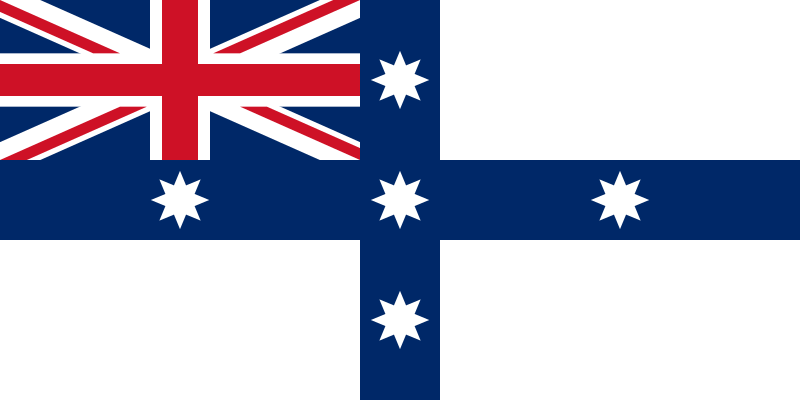
Australian Federation Flag (1831)
“While the Federation Flag proved popular and was widely used on the East Coast of Australia for over 70 years, it was never officially adopted.”[21] The Union Jack in the canton, as in proposal 4.
Image by User:Martyman, CC BY-SA 3.0
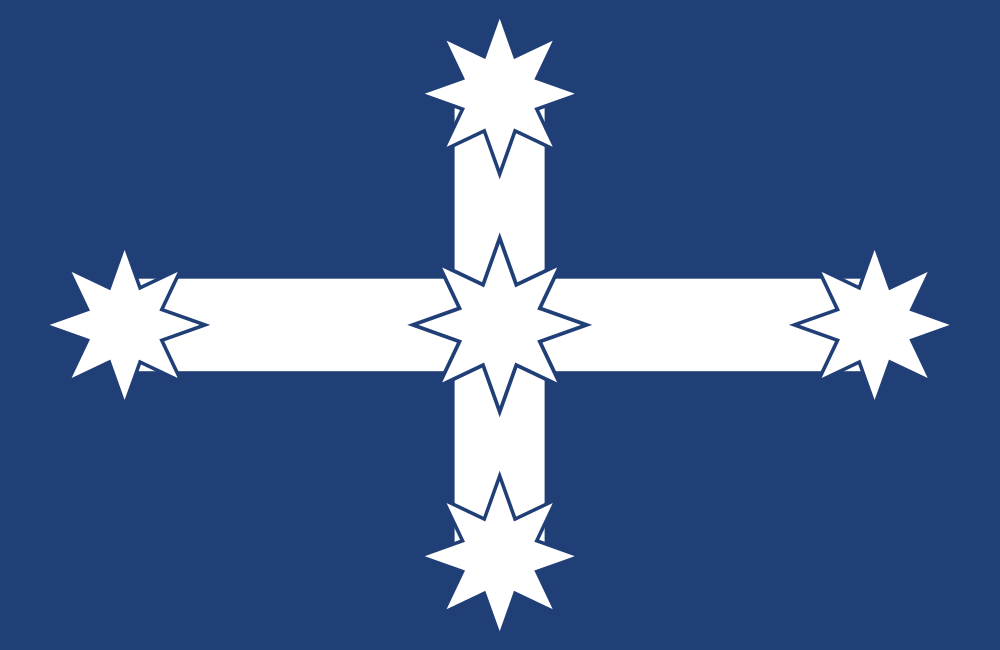
Eureka Flag (1854)
“The Eureka Flag was flown at the Battle of the Eureka Stockade, which took place on 3 December 1854 at Ballarat in Victoria”.[22]
Image, public domain
Victorian blue ensign (1870)
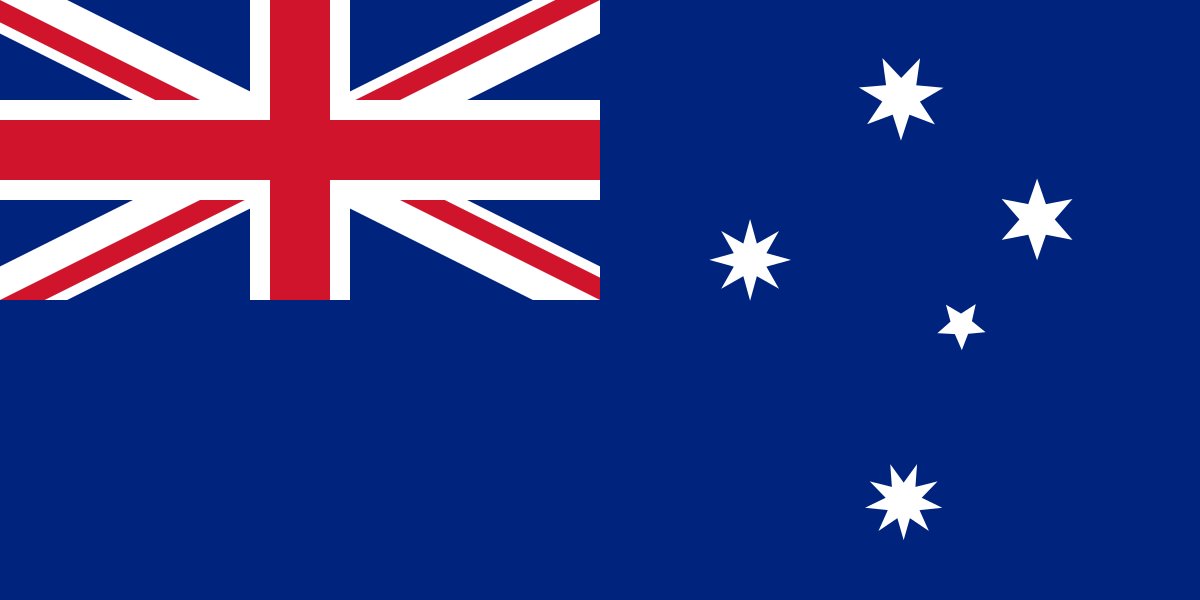
“The stars of the Southern Cross were white and had 5, 6, 7, 8 and 9 points”.[1] Ralph Kelly: the Southern Cross on the 1901 national flag was “identical to that used on the Victorian commercial flag since 1870.”[29]
Image by Tsange, CC BY-SA 4.0
Badge on a disc (1877)
“Five white stars representing the constellation of the Southern Cross on a blue shield surmounted by an Imperial Crown.” March to November 1877.[8][9]
Flags of All Nations (1909)
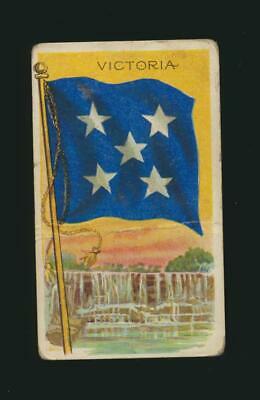
A tobacco card of 1909 to 1911, printed in the United States for Recruit Little Cigars. Not an official design.
Image, public domain
Unofficial
.svg)
.svg)


.svg)
.svg)
_01.jpg)
Sources
- ^ a b c d e f g h i “Flag of Victoria (state)”, Wikipedia, revision of 23 February 2026. Text CC BY-SA 4.0. The current flag; its history from 1870; its construction, not defined by legislation; the flag of 1844.
- ^ “State and territory flags”, Australian flags. Department of the Prime Minister and Cabinet. Text CC BY 4.0. The design shared by all six state flags.
- ^ “Blue Ensign”, Wikipedia, revision of 28 September 2026. Text CC BY-SA 4.0. Flags based on the Blue Ensign.
- ^ W. G. Perrin, British Flags: Their Early History, and Their Development at Sea. Cambridge University Press, 1922. Chapter V, “Colours of Distinction”: the Colonial Naval Defence Act of 1865 and the blue ensign with a colony’s badge. Out of copyright.
- ^ Flags Act 1953 (Cth). Sections 3 and 4: the Australian National Flag and the Australian Red Ensign.
- ^ State Arms, Symbols and Emblems Act 2004 (NSW); Emblems of Queensland Act 2005 (Qld); State Flag Act 2006 (WA). The three states that legislated for their flags.
- ^ Victoria Government Gazette No. 10, 4 February 1870, p. 225. The first badge.
- ^ a b Victoria Government Gazette No. 32, 6 April 1877, p. 629. The badge on a white disc, proclaimed on 26 March 1877.
- ^ a b Victoria Government Gazette No. 119, 30 November 1877, p. 2233. The badge under a crown, proclaimed on 12 November 1877.
- ^ a b c “Symbols of Victoria”, Australian symbols. Department of the Prime Minister and Cabinet. Text CC BY 4.0. The crown of 1901; the state colours; the stars’ differing points.
- ^ “About the Victorian flag”, Victorian Government. The advice of 19 September 1901 that the crown would be St Edward’s Crown.
- ^ John Rogers, “The Crown and Kangaroo Victorian Flags”, Provenance, no. 11, 2012, Public Record Office Victoria. The Tudor Crown in 1901, St Edward’s Crown from 1953.
- ^ “Flag of Victoria”, Encyclopaedia Britannica. The new crown authorised on 19 September 1901 and in use from 6 January 1904.
- ^ “How the Australian National Flag was chosen”, Australian flags. Department of the Prime Minister and Cabinet. Text CC BY 4.0. The simplification of the Southern Cross in 1903.
- ^ a b “Melbourne”, Flags of the World. The Greater Melbourne Ensign described (Miles Li, 9 February 2003) and attributed to John Vaughan (Ralph Kelly, 10 February 2003).
- ^ a b “Greater Melbourne Ensign 1988”, Australiana Flags. The date of the design.
- ^ “Domestic Intelligence”, Port Phillip Gazette, 29 May 1844, p. 2. Trove, National Library of Australia. The flag for the Batman’s Hill meeting described.
- ^ A. C. Fox-Davies, A Complete Guide to Heraldry, 1909. Quartering as the record of descent, chapter XXXIII.
- ^ “Flag of Ireland”, Wikipedia, revision of 24 September 2026. Text CC BY-SA 4.0. Thomas Francis Meagher’s explanation of the white, April 1848.
- ^ Censorinus, De Die Natali, chapter 14, in Latin. Varro’s five stages of a life. The English of the quoted sentence is a literal translation made for this page.
- ^ a b “Australian Federation Flag”, Wikipedia, revision of 19 August 2026. Text CC BY-SA 4.0. The flag of 1831.
- ^ a b “Eureka Flag”, Wikipedia, revision of 7 September 2026. Text CC BY-SA 4.0. The flag of 1854 and its eight-pointed stars.
- ^ a b “Victoria Police”, Flags of the World. The flag and badge described, summarising the force’s website (Jonathan Dixon, 1 October 2008).
- ^ “Fimbriation”, Wikipedia, revision of 13 December 2025. Text CC BY-SA 4.0. Fimbriation; the rule of tincture; the white fimbriation of the Union Flag.
- ^ Web Content Accessibility Guidelines 2.1, success criterion 1.4.11, W3C. 3 to 1 minimum contrast for parts of graphics.
- ^ “Murray River flag”, Flags of the World. The 1853 description, from Frank Cayley, Flag of Stars; the flag still flown at Echuca and Mildura.
- ^ “National Colonial Flag”, Wikipedia, revision of 28 August 2026. Text CC BY-SA 4.0. The flag of 1823, with John Bingle’s recollection as quoted there.
- ^ “National Colonial Flag”, Flags of the World. Bingle’s memoir as the only source; Ralph Kelly’s search of Governor Brisbane’s records (7 May 2000); John Vaughan’s interpretation.
- ^ “Eureka flag”, Flags of the World. Ralph Kelly on the Southern Cross of 1870 (2 May 2010).
- ^ “Disclaimer and copyright”, Victoria Police. The State of Victoria as registered owner of the Victoria Police crest as a trade mark.
Rights
Copyright © 2026 Brodie Geoffrey Dunn. All rights reserved.
The Cross of Victoria was designed by Brodie Geoffrey Dunn. This work is copyright. Apart from any use as permitted under the Copyright Act 1968 (Cth), no part may be reproduced by any process without prior written permission from the designer. Requests and inquiries concerning reproduction and rights should be addressed to Brodie Geoffrey Dunn, brodie2015@icloud.com.
The designer’s moral rights are asserted: the right to be named as the designer, the right not to have the design credited to anyone else, and the right not to have it treated in a way that harms his honour or reputation (Copyright Act 1968, ss 193, 195AC, 195AI).
Quotations belong to their authors. Wikipedia text is quoted under CC BY-SA 4.0 and text from the Department of the Prime Minister and Cabinet under CC BY 4.0. The Union Jack in proposal 4 follows a public-domain drawing. Images under Reference carry the licence noted beside each. The Victoria Police crest is a registered trade mark of the State of Victoria.[30] The police device and the Greater Melbourne Ensign under Reference are diagrams drawn from published descriptions, for comparison only, and are not licensed for reuse.
.svg)
Independent proposal. Not endorsed by the Government of Victoria. Not authorised by, endorsed by or connected with Victoria Police.